📋What you'll learn in this guide:
- Self-Study Reality: It takes 600-750 hours for B2
- App Rankings: Why Duolingo isn't enough
- The Swiss Problem: Hochdeutsch vs Swiss German
- Free Resources: Libraries, tandems, and radio
Short answer: Yes, you can learn German on your own. It takes 600-750 hours to reach B2 fluency. At 30 minutes daily: 3-4 years. At 2 hours daily with immersion: 12-18 months. Most expats combine apps like Babbel with weekly tandem partners for best results.
The Swiss German Trap
But here's what most people miss: The Swiss German problem. You'll learn Hochdeutsch (High German), but everyone around you speaks Schweizerdeutsch. And it's basically a different language.
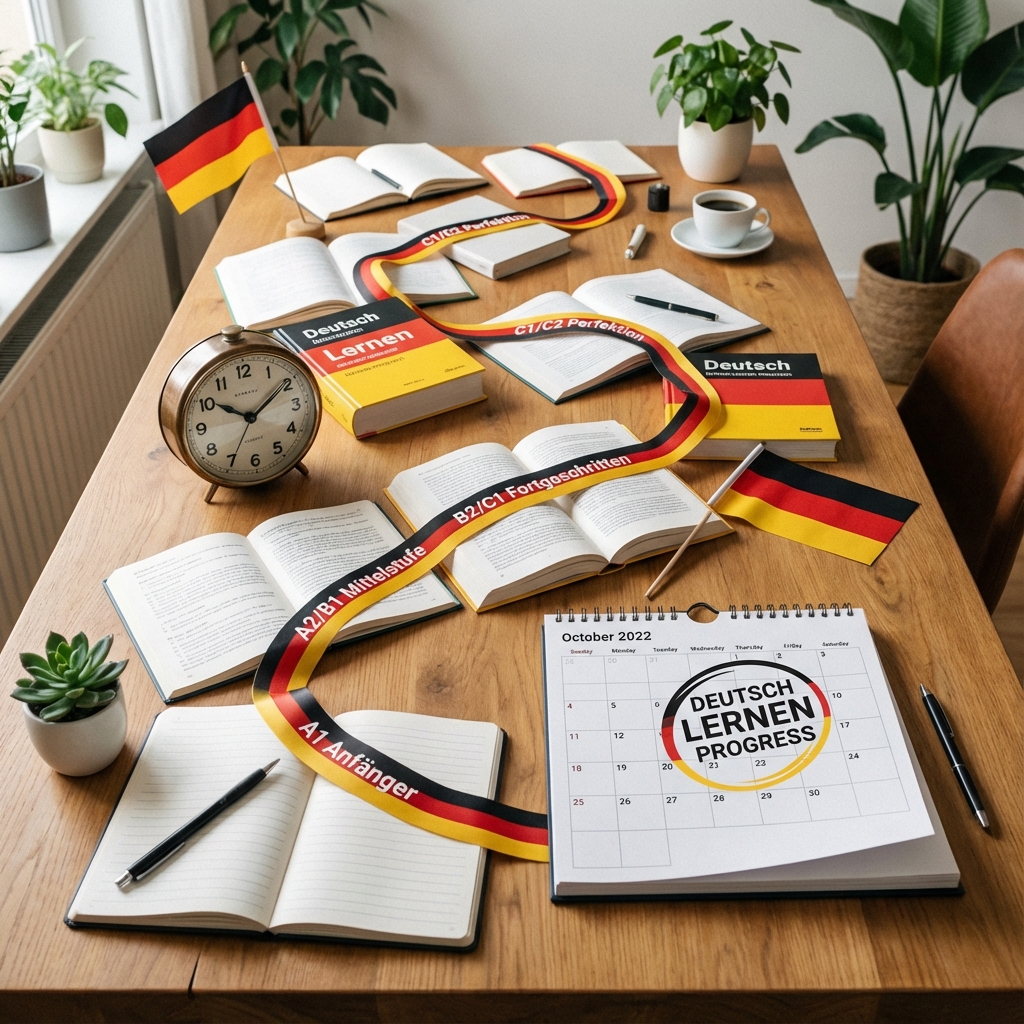
The Honest Timeline
Let's be real about how long this takes. I've seen too many people give up after 6 months expecting fluency.
German is a Category II language for English speakers. That means it's moderately difficult – harder than Spanish or French, but easier than Arabic or Japanese.
Here's what the research says:
Hours to Fluency (for English Speakers)
The reality check: At 15 minutes per day, you'll reach B1 in about 4 years. At 30 minutes daily: 2-2.5 years. That's not a failure – that's just how languages work.
💡 Pro Tip: Most expats target B1. It's the "I can survive in German" level. Good enough for daily life, basic work situations, and making Swiss friends. B2 is where you start feeling comfortable.
Best Self-Study Methods (Ranked)
I've tried them all. Here's what actually works.
Language Apps: The Good Ones
Not all apps are equal. Here's my honest ranking:
Language Apps Ranked
- Babbel: Best overall. CHF 7/mo. Teaches useful grammar.
- Pimsleur: Best for commutes. CHF 15/mo. Pure audio/speaking.
- iTalki: Best for practice. CHF 15-30/hr. Real human tutors.
- Anki: Best for vocab. Free. Spaced repetition flashcards.
- Duolingo: Supplement only. Free. Good for streaks, bad for fluency.
My recommendation: Start with Babbel for 6 months to build foundations. Add Pimsleur for your commute. Then switch to iTalki for speaking.
🚫 What doesn't work: Duolingo alone. It's fun. It keeps your streak alive. But after 2 years of Duolingo, you still won't hold a conversation. Trust me – I learned this the hard way.
YouTube Channels (Free and Good)
For when you want to learn but don't want to study:
- Learn German with Anja – Grammar explained clearly, good for beginners
- Easy German – Street interviews with subtitles. Real German, real people.
- Deutsch mit Marija – B1+ content. She explains nuances.
- Get Germanized – Culture + language, entertaining
Podcasts for Commutes
These work great while walking or on the train:
- Coffee Break German – Structured lessons, beginner-friendly
- Slow German – Exactly what it sounds like. Clear, deliberate.
- News in Slow German – Current events, B1+ level
The Swiss German Problem
Here's something nobody tells you before you move:
You learn Hochdeutsch (High German) from books and apps. It's the standard language, used in writing, news, and formal situations.
Then you arrive in Zurich and nobody speaks it.
Swiss German (Schweizerdeutsch) is what you hear in shops, offices, and social settings. And it's different. Really different.
Standard German vs Swiss German
| High German | Swiss German | English |
|---|---|---|
| Guten Tag | Grüezi | Hello |
| Ich möchte | Ich wett | I would like |
| Entschuldigung | Exgüsi | Sorry |
| Auf Wiedersehen | Uf Wiederluege | Goodbye |
| Ja | Jo | Yes |
It's not just accent. The grammar shifts. The pronunciation changes completely. Words that don't exist in standard German appear.
So... Do You Need Swiss German?
For work: Usually no. Most professional environments use High German (or English). Swiss people switch to Hochdeutsch in meetings, especially with foreigners.
For social life: Yes, it helps enormously. Understanding Swiss German opens doors. You'll be invited to more things. Conversations flow easier. People appreciate the effort.
My recommendation: Focus on Hochdeutsch first. Get to B1. Then start picking up Swiss German naturally through exposure. Don't try to learn both simultaneously – your brain will melt.
📌 Quick Fact: Swiss people understand High German perfectly. They just prefer speaking Swiss German among themselves. If you speak Hochdeutsch, they'll understand you and likely respond in Hochdeutsch too.
Your Personal Timeline
Here's a quick reference based on your available time:
The Busy Professional (30 min/day)
- A2 in: 6-8 months
- B1 in: 18-24 months
- B2 in: 3-4 years
This is realistic for someone with a full-time job and life. Don't feel bad about this pace.
The Dedicated Learner (1-2 hrs/day)
- A2 in: 2-3 months
- B1 in: 6-9 months
- B2 in: 12-18 months
If you can commit to this, you'll progress fast. Combine structured learning with immersion (German Netflix, German podcasts, German partner).
The Intensive Mode (4+ hrs/day)
- A2 in: 4-6 weeks
- B1 in: 3-4 months
- B2 in: 6-9 months
This requires full focus. Usually only possible if you're not working or studying German full-time.
Free Resources in Switzerland
You don't have to spend much. Switzerland offers plenty of free options.
Tandem Partners
Find a Swiss person who wants to practice English. You speak 30 minutes in German, 30 minutes in English. Everyone wins.
Where to find them:
- Tandem app – Match with local speakers
- HelloTalk – Chat + voice messages
- Facebook groups – Search "German-English Tandem Zurich" (or your city)
- Meetup.com – Tandem meetups happen weekly in major cities
Library Programs
Many Swiss libraries (Stadtbibliothek) offer:
- Free conversation groups
- Language café events
- Book clubs for German learners
Check your local library's events calendar.
Canton-Subsidized Courses
Depending on your canton, you might qualify for free or subsidized German courses. This is especially true for:
- New residents
- Spouses of Swiss citizens
- People on certain permit types
Ask at your local Gemeinde (town hall) about "Integrationskurse" (integration courses).
Immersion Hacks
These are free and surprisingly effective:
- Change your phone to German – You'll learn tech vocabulary fast
- Netflix with German audio + German subtitles – Not English subs! German subs.
- German-only grocery shopping – Look up products, read labels
- German radio in the morning – SRF 3 for music, SRF 1 for talk
The 4 Mistakes That Kill Progress
I've made all of these. Learn from me.
Mistake 1: Only Using Apps
Apps are tools, not teachers. They can't teach you to speak. You need human interaction – even if it's just 30 minutes a week with a tandem partner.
How to Actually Learn
DO THIS
- Speak from Day 1 (even if it's bad)
- Learn whole phrases ('How much is...')
- Listen to German radio/podcasts daily
- Set phone language to German
DON'T DO THIS
- Rely 100% on Duolingo
- Focus only on grammar tables
- Wait until you are 'ready' to speak
- Try to learn Swiss German first
Mistake 2: Waiting Until You're "Ready" to Speak
You'll never feel ready. Start speaking on day 1. Say "Grüezi" at the grocery store. Order in German even if you stutter. The embarrassment passes. The progress compounds.
Mistake 3: Ignoring High German
I've met expats who tried to learn Swiss German directly. It doesn't work. Swiss German has no standardized written form. There's no grammar book. Every canton speaks differently.
Master Hochdeutsch first. Then Swiss German makes sense as a variation.
Mistake 4: No Consistency
15 minutes every day beats 2 hours on Saturday.
Language learning is like fitness. You can't cram. Your brain needs daily exposure to form pathways. Miss a week and you feel rusty. Miss a month and you've lost ground.
Conclusion: Your Action Plan
Here's what to do now:
- Pick one app and commit – Babbel for 6 months minimum
- Add audio input – Podcasts or Easy German during commutes
- Find a tandem partner – Even once every two weeks helps
- Set a realistic goal – B1 in 18 months is achievable at 30 min/day
- Change your phone language to German – Free immersion
Learning German on your own is possible. It's not easy. It takes years, not months. But every expat who's done it says the same thing: it was worth it.
Your social life opens up. Your job options expand. Switzerland feels like home instead of a temporary stop.
Start today. Even 15 minutes counts.
Read Next
- How Long to Learn German? Realistic Timeline – Detailed breakdown by level
- Best German Courses in Zurich – When self-study isn't enough
- Language Learning Resources – Apps and courses we recommend
Frequently Asked Questions
Is German harder than French?
For English speakers, German is slightly easier. Both share Latin roots, but German has more structural overlap with English. The US Foreign Service estimates 750 class hours for German vs 750 for French (same category). The case system makes German feel harder initially, but it's learnable.
Can I live in Switzerland without German?
Yes, especially in Geneva (French-speaking), international companies, or tech/pharma sectors. But your social integration will suffer. Swiss people appreciate any German effort. It's the difference between tolerating Switzerland and loving it.
Is Swiss German a different language?
Officially, it's a dialect family. But many linguists consider it different enough to be its own language. Swiss German varies by region – someone from Zurich sounds different from someone from Bern. The key difference from High German: different pronunciation, unique vocabulary, and some grammar variations.
What's the best app for German?
For structured learning: Babbel. For vocabulary: Anki. For listening: Pimsleur. For speaking practice: iTalki. Don't rely on just one – combine 2-3 for best results.
You've got this. Start today.